3 Likes
These 3 women in Brazil sound incredible and powerful and real agents of change. I really like the way it is written.
2 Likes
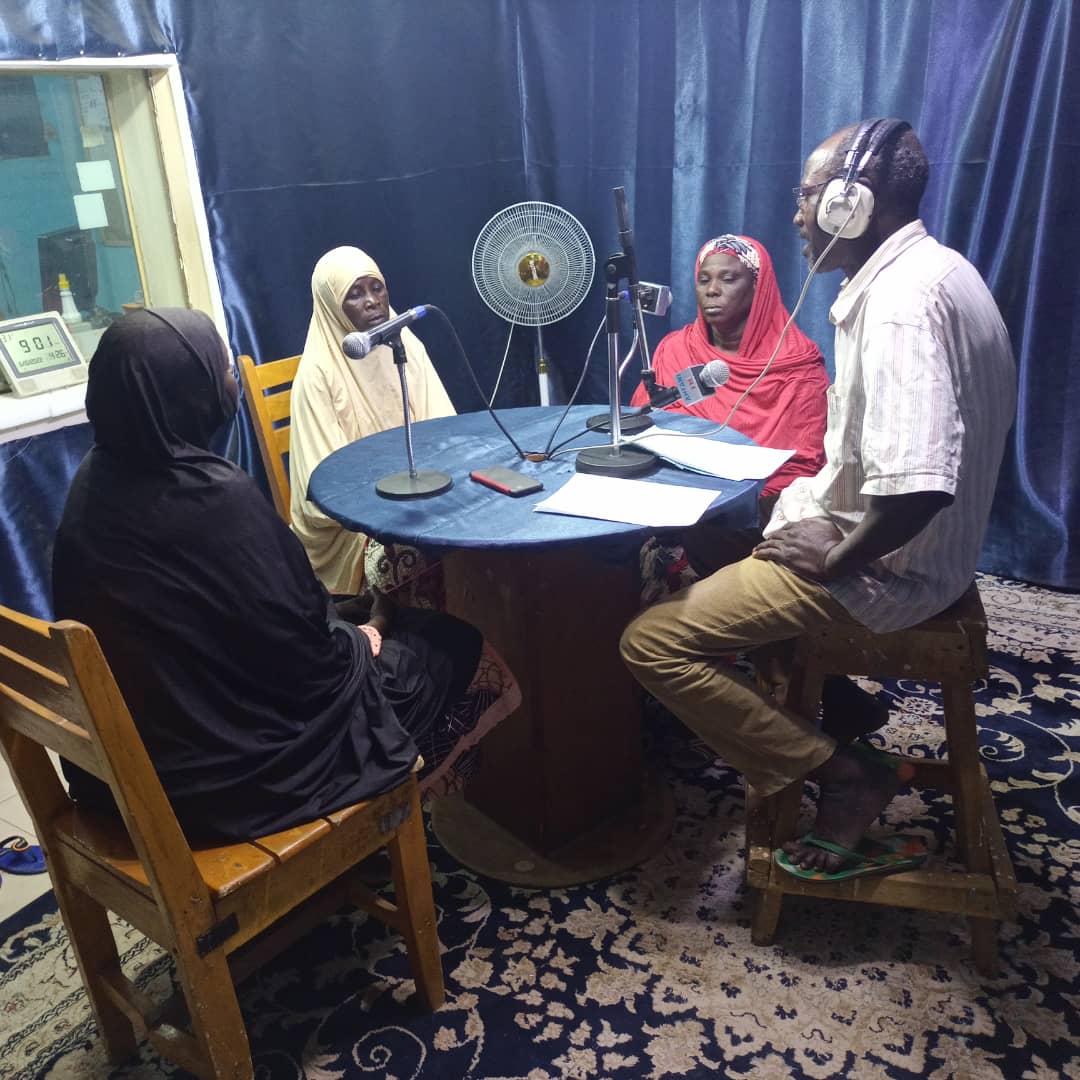
This photo shows women in Niger who are part of a village savings and loan association discussing the data findings and reaching out to their communities. They were the lead in discussing, sense-making and reflecting with us on what changes we should make to the ways we listen.
5 Likes
The good things is there’s lots of great examples out there - The New Humanitarian’s Flipping the Narrative is a great series told by refugees, Matagi Malohi is a beautiful narrative on climate impacts in the Pacific, SBS’s The Boat is a brilliant visual narrative that beautifully weaves words, art and animation to tell the story of a family, IllumiNative has brilliant spoken word by Indigenous people, I’d of course share BRAC’s work, which strongly centres people and communities directly affected by issues, for example on The Good Feed. I list all these examples and more in Better Conversations about Ethical Storytelling, available on Devex - a great resource in general on storytelling. No excuses, guys! 
3 Likes
One of the most impressive communication systems that I’ve seen had to do with reducing infant mortality rates by transitioning how mother’s were breastfeeding. After seeing many communications have little impact, they transitioned to a two-part visual poster that was placed all over town. This simple visual quickly provided the intervention necessary, latching, in a way that did not require any level of literacy in language.
4 Likes
I wanted to share this too - a great example from Co-op, a retailer here in the UK – they have a page on their webpage for each commodity they sell, like tea, coffee, cocoa and so on. This is the example video next to information about their cocoa, in which Traore Awa explains what Fairtrade means and explains the Women’s School of Leadership. https://youtu.be/AQPy0zloRY0 It’s in her own words and she is positive, strong, and an active part of the moment, certainly not a beneficiary or a passive receiver of aid.
2 Likes
This sounds really interesting Nick, I’d like to read and hear more about it
2 Likes
Another good example to flag up too, more on a B2C angle: The role of the Fairtrade Foundation is to provide market access to the UK for farmers, and generate consumer interest. So last year we had an ‘Endangered aisle’ pop up store in Soho which gained footfall of passers-by and demonstrated an aspect of farming that comes up again and again from individuals: the climate crisis making life harder and harder. You can read three of the farmers stories in this report Endangered-Aisle_Fairtrade-Fortnight-briefing-paper_2023.pdf
3 Likes
Here is our second question today:
Here’s one of our own pieces - Play Verto was a partner in a multi-org collaboration - where 17k people (the target communities of social enterprises shared their reality)
- heres a wash-up video: https://youtu.be/AxeptuYZ1gc?si=Q08lQn1frjV3-kjn
3 Likes
Here’s one example that spotlights an issue that isn’t being talked about a lot, and really needs to be: Women in coastal Bangladesh are losing their uteruses to the climate crisis
3 Likes
When it comes to making sure that comms are authentic, for me that is about genuine co-collaboration of content with the people the content is about. ‘if its not by me, it’s not for me’ - that was something told to me by a cocoa farmer from Ghana, who worked closely with our partners Fairtrade Africa. They were saying that if it isn’t a quote, a story told by themselves, or co-created with themselves, then it isn’t something that they were happy to be represented by. This is something that is essential to get right for authentic and effective comms that are true, ethical and certainly in a landscape where the UK public is cynical of greenwashing.
2 Likes
-
Always contextualize—there is no one-size-fits-all. Even in one country, different regions and groups may require different approaches.
-
Embrace imperfection – don’t aim for a perfect strategy, tool, or process.
*Listen, reflect, and learn – we may be experts in different fields, but human lived experiences are complex and context-specific; thus, putting ourselves as learners and deliberately listening to people and communities can help us build meaningful partnerships to support and sustain social impact.
People appreciate actions. Part of the listening process should consider what people suggest and co-create actions with them.
4 Likes
The key really is in being human-centered. Our storytelling should treat the people we serve as full, rounded, complex human beings, rather than treating them as tropes or forcing them into a pre-determined box.
Not only is it more ethical, you end up telling more interesting, compelling, and effective stories.
What does that mean in our day-to-day work? It means being open-minded, listening actively, and being willing to follow the story wherever it goes. It means doing the research to really understand the local context. And it means asking yourself, “Would I be comfortable as the subject of this story?”
5 Likes
One of the effective ways I admire and try to do is ensuring we are sharing the voice of lived experience - authentically and accurately. As we focus on play based research and impact measurement - this tends to be through the sharing of data and insights.
We’ll then share these across multi-channels and in different formats - adopting the notion “no decision about me, without me” - really ensuring those we feature have their say on how we are representing them. Essentially nurchering a trusting relationship which means when we engage with them again, they are happy to contribute because they have experienced our intentions and actions first hand.
3 Likes
-
Always build a feedback loop to communicate more regularly. Share the data, information, story…,etc with the communities you are working with; they should have access to it, and get support so that they can apply to issues that they want to address.
-
It is up to us to make an effort to reduce the power imbalance. We often work with vulnerable groups and communities, and there is always a power dynamic that may be actual or perceived. Respecting and appreciating people’s voices, time, language, culture…, etc., can play a role in supporting joint ownership of any initiative.
6 Likes
Building on my previous (micro-communications) answer, taking the time to know another person – to find something one can have in common is a great start. Plunging into a conversation with little knowledge of the other person is, pretty much by definition, not going to be human-centred. It’s going to assume categories of the other person that may or may not be true.
There are implications for this. At the risk of running too far with a tangent, my main focus is how business can impact (positively or negatively) conflict and violence. One of the key features of violence/war is the dehumanizing of the “other side” whether in terms of demonization or simply in terms of an opponent being in another uniform. Either one stripes the person of their humanness and so providing the opportunity for that person to have a voice, even if one disagrees with that voice, is important. Again, I’m focusing on interpersonal kinds of communication - retail communications if you like - rather than organizational message (which again I think is super important, but just isn’t in my wheelhouse of knowledge).
Once into the conversation, one cannot minimize the importance of listening. Not arguing – at least not at first – but listening to what the other person believes is important to fostering constructive dialogue. A technique I have used, in personal life, in my classrooms, and in business consulting, is to have people share a story of something that they found demonstrated their values. Then to actually say – not just read – their stories. What I have found is that even when others disagree with the values of another person, they can respect the sincerity of someone else’s values.
4 Likes
What we don’t talk about enough is that it starts with mindset. We can talk all we like about time constraints, medium constraints, fund constraints, but mindset, in my experience, is the biggest challenge. We need to genuinely believe that people have the ability to change their own lives. That they have insights, experience and ideas that we don’t. That all they need is the tools, platforms, resources, and we’re just catalysts. At BRAC, we see people as producers, not just consumers. We don’t do aid or charity, we just stand with people and ensure they have what they need - they do the rest. If this mindset is fundamentally there, if we’re genuinely curious, and not in an extractive or paternalistic way, if we’re actually willing to step aside, to hand over the mic, to just be the platform rather than speaking for people, the stories will be interesting - and effective. Without that mindset, the typical stories we see in the development space lack nuance, they’re bland, linear - or overdone, but frankly just boring.
4 Likes
Context, context, context!
In Rebel Spirit Collective’s Critique to (Re)Creation Storytelling Series, we use a triangulated focus technique across everything we do. One of these lenses is always choosing one lens from our Dynamic Decolonization Matrix which runs the gamut and is usually story creator facing. This can be anything from examining my own implicit bias to the utilization of positionality to better questions. The second part of the triangulation is about the co-creation outcomes the story should portray - in other words, what’s the theory of collaboration with the people in the story and last is what is the listening and learning that needs to be done BEFORE any storyboard is created. What do we need to unlearn and what do we need to learn in order to create something that centers the humanity of the story.
4 Likes
Plan from the beginning; human-centered communication is not a one-time off activity in your project, program, or research; plan and apply it from the start and budget for it - it doesn’t have to be expensive, but it should be reflected in the plan and budget.
Focus on identifying ‘who should be in the room’, ‘why are we doing this, why are we creating this’?
5 Likes